
When parents worry about what their children are doing online, the instinct to regain control is understandable. Block the app. Set a time limit. Check the location. Read the messages. An entire industry is built around that instinct, and its promise is simple: if parents can see more, restrict more and intervene earlier, children will be safer.
The research is less straightforward. Control, knowledge and safety are not the same thing.
What does the research say about monitoring kids online?
Monitoring can stop some behaviors while a restriction is in place, but that is not the same as making a child safer. In one study of 75 apps, 89 percent of the identified features served adult control and only 11 percent supported young people’s self-management.[1] And much of what parents know does not come from monitoring at all: it comes from children voluntarily telling them.[3]
Rules still matter, but they should change with age and help children understand the risk they are managing. So the useful question is not only, “What will this stop my child from doing?” It is also, “What will this teach them to do when I am not there?”
What are monitoring tools designed to do?
In 2017, Pamela Wisniewski and her colleagues examined 75 apps sold to parents and identified 42 different features appearing 382 times.[1] The striking finding was who those features were built to serve: 89 percent served the adult’s control, while only 11 percent were designed to help the young person learn to manage their own online behavior. That distinction matters, because a safety net can prevent a child from doing something while the net is present, but it does not necessarily help them understand the risk, make a good decision or manage a similar situation later.
The following year, researchers examined 736 public app-store reviews written by children and teenagers aged 8 to 19.[2] Seventy-six percent gave one star, and the most common complaint was excessive restriction, followed by invasion of privacy. Teenagers disliking these tools does not prove that the tools are ineffective, but it does reveal a tension that is easy to overlook: online safety is not only a technical problem, it is also a relationship problem.
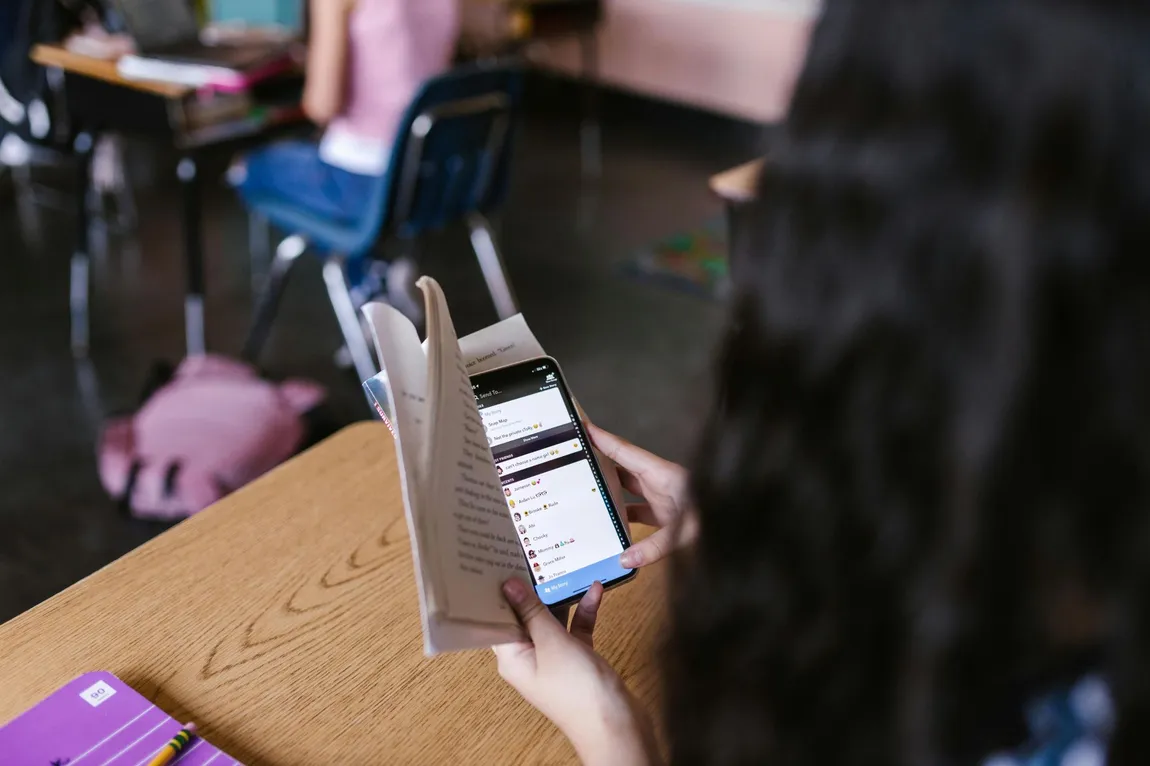
How do parents actually find out what their kids do online?
Most of what parents know comes from children choosing to tell them, not from monitoring or investigation. A classic study of 703 teenagers found that parental knowledge came mainly from disclosure, and later research links that openness to trust rather than to control.
That idea appears in research that predates smartphones. In 2000, Håkan Stattin and Margaret Kerr studied 703 Swedish 14-year-olds to examine how parents came to know what was happening in their teenagers’ lives.[3] Much of that knowledge came from teenagers voluntarily telling them; it did not primarily come from parents successfully investigating, monitoring or extracting information.[4]
Imagine two families. In one, the parent has every password, checks every conversation and receives an alert whenever something unusual happens. In the other, the parent sees less, but the child feels able to say, “Something happened online and I don’t know what to do.” Which parent is better informed? The answer may not be the one with the more powerful dashboard.
Two larger studies measured trust directly, one involving 3,017 teenagers in Hong Kong[5] and one involving 3,349 teenagers in mainland China.[6] In both, negative parental control was associated with lower trust, while parental knowledge was associated with higher trust. Both were snapshots rather than experiments, so they cannot tell us which way the relationship runs. None of this means that every restriction causes harm, or that parents should leave children to navigate the internet alone. It means control and knowledge are not the same thing.
Is online risk the same as being harmed?
No. Encountering a risk online is not the same as being harmed by it. Children build judgement by gradually handling risk, the way they learn to cross roads or travel independently. Removing every online risk can also remove the chance to practise, ask for help, and recognise manipulation.
The EU Kids Online 2020 survey of children across 19 countries distinguishes between encountering a risk and being harmed by it.[7] That distinction can feel uncomfortable, because a parent’s instinct is often to remove as much risk as possible. But childhood has never worked that way offline. Children gradually learn to cross roads, travel independently, handle friendships, resolve arguments and recognise unsafe situations, and we do not expect them to wake up at 18 already knowing how to do these things. They learn through incremental increases in responsibility.
Digital life creates the same challenge on less familiar terrain. A child protected from every online risk may encounter fewer problems today, but if protection also means they never practise judgement, ask for help, recover from mistakes or recognise manipulation, what happens when the controls disappear? This is why researchers have argued for moving beyond privacy-invasive control towards approaches that help adolescents build resilience and take part in decisions about their own safety.[8]
Do screen-time rules still matter?
There is an easy way to misread this research: if control and knowledge are different, perhaps parents should stop setting limits. That is not what follows. Children need boundaries, and a six-year-old and a sixteen-year-old should not have the same digital freedom. Some platform risks cannot reasonably be left for children to manage alone, and responsibility also belongs with technology companies and regulators.
The better question is what a boundary is trying to achieve. Is it only stopping a behavior, or is it helping a child eventually manage that behavior without you? A younger child might need a hard restriction on installing apps, while an older teenager might need a conversation about what an app collects, why a platform worries you and what they would do if someone contacted them inappropriately. The rule may still exist, but now the child understands it, and it can change as their judgement develops.
What should parents do first to keep kids safe online?
Start with simple, low-tech habits before any software. Keep devices away from meals and out of bedrooms overnight, put distance between screens and sleep, and have times when adults put their phones away too. Then make it safe for a child to tell you when something goes wrong.
Some of the most useful family rules are also the least technologically sophisticated. The American Academy of Pediatrics recommends creating a family media plan and setting boundaries around media use for the whole family.[9] A sensible first step is an honest look at where your family stands today. Keep devices away from meals, keep them out of bedrooms overnight, and create distance between screens and sleep, and have times when adults put their phones away too. None of this requires surveillance software, and it does not depend on settling the wider argument about smartphones and mental health. If a device is consistently disrupting sleep, conversation or time together, changing that pattern is useful in its own right.
Then comes the harder part: making it possible for children to tell us when something goes wrong, which means reacting carefully when they do. If admitting a mistake automatically leads to losing the phone for a month, children may not learn how to stay safe. They may simply learn not to tell us next time.
Should online safety depend on constant monitoring?
The goal of parenting is not to build a perfect system of controls around a child, because those controls eventually disappear. The goal is to help create an adult who can recognise risk, make decisions, ask for help and recover when something goes wrong. Filters and time limits can be useful, but they are guardrails, not a relationship.
Before using one, ask two questions: what will this stop my child from doing, and what will this teach them to do when I am not there? Research can inform the decision and technology can provide useful boundaries, but neither can decide when a particular child is ready for more independence. That part still belongs to the family.
Allowed Online is being built around this principle: practical boundaries, better family conversations and more responsibility as children grow.
Get the next research-backed guide in your inbox.
Sources
[1] Wisniewski, P., Ghosh, A. K., Xu, H., Rosson, M. B. & Carroll, J. M. (2017). Parental Control vs. Teen Self-Regulation: Is There a Middle Ground for Mobile Online Safety? Proceedings of CSCW ‘17, 51-69.
[2] Ghosh, A. K., Badillo-Urquiola, K., Guha, S., LaViola, J. J. & Wisniewski, P. J. (2018). Safety vs. Surveillance: What Children Have to Say About Mobile Apps for Parental Control. Proceedings of CHI ‘18.
[3] Stattin, H. & Kerr, M. (2000). Parental Monitoring: A Reinterpretation. Child Development, 71(4), 1072-1085.
[4] Kerr, M. & Stattin, H. (2000). What Parents Know, How They Know It, and Several Forms of Adolescent Adjustment. Developmental Psychology, 36(3), 366-380.
[5] Shek, D. T. L. (2006). Perceived Parent-Child Relational Qualities and Parental Behavioral and Psychological Control in Chinese Adolescents in Hong Kong. Adolescence, 41(163), 563-581.
[6] Ying, L., Ma, F., Huang, H., Guo, X., Chen, C. & Xu, F. (2015). Parental Monitoring, Parent-Adolescent Communication, and Adolescents’ Trust in Their Parents in China. PLOS ONE, 10(8), e0134730.
[7] Smahel, D. et al. (2020). EU Kids Online 2020: Survey Results from 19 Countries. EU Kids Online.
[8] Park, J. K., Akter, M., Wisniewski, P. & Badillo-Urquiola, K. (2024). It’s Still Complicated: From Privacy-Invasive Parental Control to Teen-Centric Solutions for Digital Resilience. IEEE Security & Privacy, 22(5), 52-62.
[9] American Academy of Pediatrics, Council on Communications and Media (2026). Digital Ecosystems, Children, and Adolescents: Policy Statement. Pediatrics, 157(2), e2025075320.